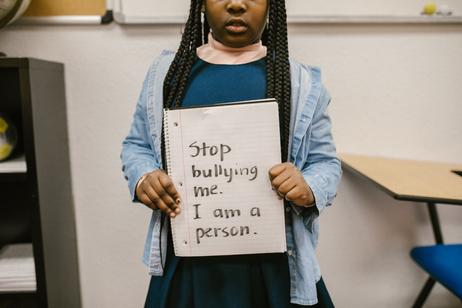
Bullying has been a problem in schools for generations, but the easy access to students granted by the internet and cell phones has broadened the problem exponentially. Case in point: 15-year old Phoebe Prince committed suicide in January of this year because classmates bullied her in person, through social networking sites like Facebook, and with threatening texts sent to her cell phone.
The opportunity for cyber-bullying and traditional bullying may be getting larger, but the public outcry is also increasing as the media is bringing more of these high profile cases to attention.
The U.S. Department of Education responded to the bullying problem this year by hosting the first ever anti-bullying summit in Washington D.C. this month. According to a report at , the goal of the summit was to "engage governmental and non-governmental partners in crafting a national strategy to reduce and end bullying." The summit was headed by Education Secretary Arne Duncan and attended by many professional educators who want to put a stop to this destructive behavior once and for all.
This brief video from the Mormon Channel illustrates bullying in clear terms.
How Prevalent is Bullying?
In opening remarks at the summit, as reported by the , Duncan presented some of the following statistics:
- Just three years ago, nearly one in every three middle and high school students said they were bullied at school.
- One out of every nine high school students reported that they had been shoved, tripped or spit on during the previous school year.
- One out of every four or five students reported to being threatened with harm.
- As many as 900,000 high school students reported that they were victims of cyberbullying in 2007.
Duncan added that not feeling safe at school because of bullying and other issues directly affects a child's ability to learn. He told the summit in his opening remarks, "A school where children don't feel safe is a school where children struggle to learn. It is a school where kids drop out, tune out and get depressed." Duncan disputed the idea that bullying can be simply shrugged off or that it is a concept to elusive to effectively define and control.
The Purpose of the Summit
The anti-bullying summit was primarily created to initiate dialogue among bullying experts in the hopes of finding bold, creative solutions to stop bullying for good, according to Duncan's opening remarks posted at the . Duncan adds that stopping bullying completely will require cooperation from state and local authorities, as well as the federal government.
Duncan promised better coordination among federal agencies to more effectively address the bullying issues. He also said that better data and more federal funding, especially for schools with the greatest needs, would be necessary to eliminate bullying across the country. However, some experts believe that these tools are just the tip of the iceberg in getting to the root of the bullying problem.
Nancy Willard, executive director of the Center for Safe and Responsible Internet Use, told Christian Science Monitor that funding has been cut, making it more challenging for schools to combat the bullying problem. Willard added that adults working with kids desperately need training in how to handle bullying properly. For example, Willard suggests teaching educators how to follow up on bullying reports to ensure that all parties involved see an improvement in the situation after bullying incidents have been properly reported. Willard explains that at this time, school principals simply don't have the tools they need to meet the bullying issue head-on and eliminate it for good.
What Parents Can Do
Parents that are worried their children are being bullied should look for the following signs, according to :
- Comes home with torn clothing or damaged books
- Has bruises, cuts or scratches that he won't explain
- Seems afraid to go to school or get on the bus in the morning
- Loses interest in school
- Appears sad or depressed for no apparent reason
- Seems socially isolated and rarely sees friends outside of school
When parents see any of these signs in their child, the website recommends contacting the child's teacher right away. Try to stick with the facts of the situation without getting overly emotional. Your primary goal should be to get the school to cooperate with you in putting an end to the bullying problem.
CloudMom explains what parents can do about bullying in the following video.
Bullying may be a problem that has been around schools for some time, but the good news is that many in the field of education are ready to put a stop to the issue. Perhaps this anti-bullying summit will be the first step in developing effective programs and solutions that will end the bullying problem for good.
Questions? Contact us on Twitter. @publicschoolreview